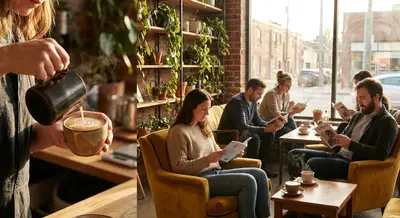
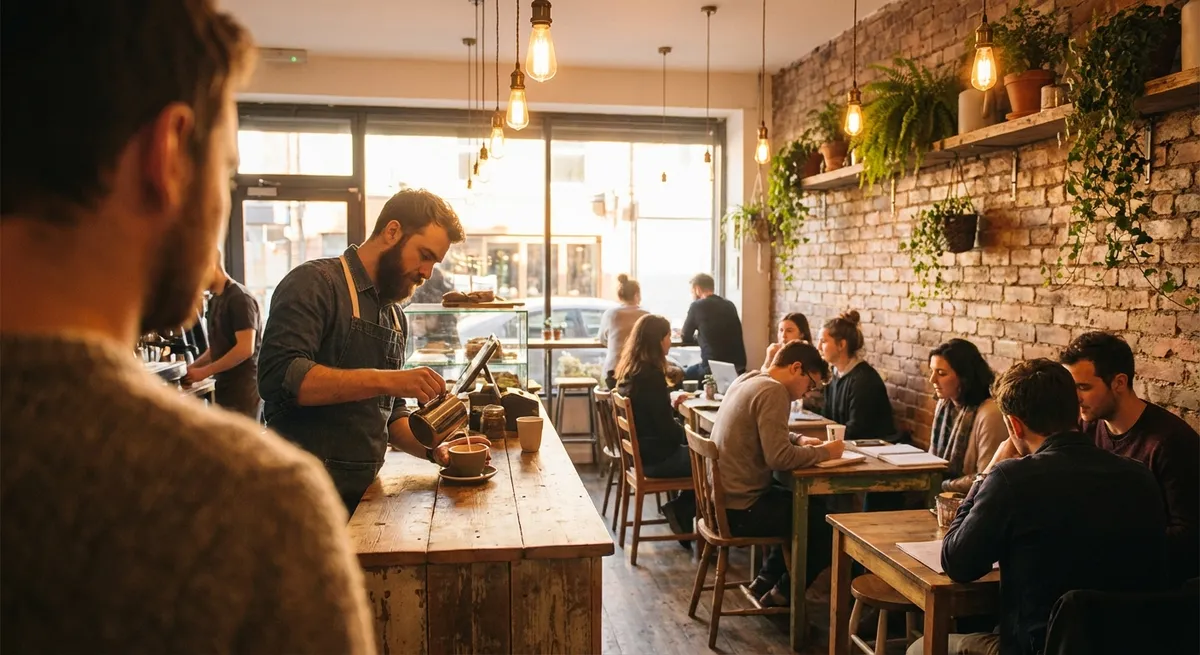
Cafés are more than caffeine stops—they’re “third places” where we linger between home and work, swap ideas, and discover new flavors in the cup. At RoastEden, we’re fascinated by how café culture shapes the way we drink coffee and the way we connect with each other. This guide walks through the heart of modern café culture, then brings that inspiration back home: how to choose beans, brew with intention, taste like a pro, and pick gear that matches your lifestyle, not just your Instagram feed.
What Café Culture Really Is (and Why It Feels So Good)
Walk into a great café and you’ll feel it before you taste anything. The low murmur of conversations, the hiss of steam wands, a barista calling out names, the faint sweetness of freshly ground coffee in the air. That sensory blend is not an accident; it’s a culture that’s evolved over centuries—from Ottoman coffeehouses and Parisian salons to Italian espresso bars and today’s specialty cafés.
Modern café culture is built on three intertwined pillars: community, craft, and curiosity. Community shows up at the long table where strangers share power outlets and small talk. Craft appears in the careful dialing-in of espresso shots or the precisely timed pour-over. Curiosity is the reason a barista happily explains the difference between a washed Ethiopian and a natural Brazilian even when the line is long.
For many of us, cafés have quietly become creative studios, remote offices, and places to pause in overstimulated lives. The best cafés invite you to slow down for a few minutes, notice what’s in your cup, and maybe bring a piece of that ritual back home. That’s where bean selection, brewing technique, and tasting skills come in—not as gatekeeping, but as tools to deepen your enjoyment.
Decoding the Menu: Origins, Roasts, and Flavor Language
Café menus can feel like a new language: origin names, processing methods, roast levels, and tasting notes that sound like a fruit salad. Underneath the poetry, there’s a simple structure that helps you choose confidently.
Single-origin coffees come from one specific country, region, or even farm. Think “Ethiopia Yirgacheffe” or “Colombia Huila.” These coffees often highlight distinct flavor profiles: Ethiopian beans might lean floral and citrusy; Colombian lots often offer balanced chocolate and caramel notes. Blends, on the other hand, combine beans from multiple origins to create a consistent, balanced cup that works especially well for espresso drinks.
Roast level is your second compass. Light roasts tend to showcase acidity and origin character—bright, tea-like, sometimes with fruit or floral notes. Medium roasts sit in the sweet spot for many drinkers, with both sweetness and some origin nuance. Dark roasts emphasize body, bitterness, and roasted flavors like smoke or dark chocolate, while muting subtle fruit and floral tones.
Those poetic tasting notes (“peach, jasmine, honey”) are not syrups added to the coffee; they’re ways professionals describe the natural aromatic compounds produced during roasting and brewing. You might not taste every descriptor right away—many people start by simply asking: is this cup more bright or more mellow, more fruity or more chocolatey, lighter or heavier in body? Over time, you’ll piece together your own sensory vocabulary, just like regulars at your favorite café.
Choosing Beans Like a Barista: A Practical Walkthrough
Standing at the café retail shelf can be overwhelming. Here’s a step-by-step approach you can use both at the café and online:
- Start with your brew method.
If you mostly drink espresso or moka pot, look for blends or medium-to-dark roasts designed for espresso. For pour-over, AeroPress, or drip, lean toward light to medium roasts and single origins.
- Decide how adventurous you feel.
If you’re new to specialty coffee, start with “comfort” profiles: Brazil, Colombia, or blends with notes like chocolate, caramel, or nuts. When you’re ready to explore, try East African coffees (Ethiopia, Kenya) with brighter, fruitier notes.
- Check the roast date, not just the label design.
Freshness matters. For filter coffee, many cafes recommend using beans within 2–4 weeks of roast; for espresso, 7–21 days often works well as beans degas. Very old coffee (months) will taste flat and papery.
- Read the processing method.
- Washed (or wet-processed): cleaner, crisper flavors, often brighter acidity.
- Natural (dry-processed): fruitier, heavier body, sometimes jammy or winey.
- Honey or pulped natural: a middle ground—sweet and round with some clarity.
- Ask for a recommendation.
Baristas usually love this question: “I usually like X (for example, chocolatey medium roasts) and I brew with Y (for example, French press). What do you recommend?” Their suggestions often become your new favorite beans.
- Buy just enough.
Aim for what you’ll drink in 2–3 weeks. Store in a cool, dry place in an airtight container (or the original resealable bag), away from light and heat—not in the fridge or freezer if you’re opening it daily.
By treating bean selection as a small conversation—with yourself, with your barista, and with the origin—you turn a shopper’s decision into part of the café culture experience.
Brewing with Intention: Café-Inspired Methods at Home
You don’t need a full commercial setup to brew café-quality coffee at home. What you do need is a consistent method and a willingness to tweak variables one at a time. Here are café-inspired, step-by-step frameworks for three common brew methods.
Filter Coffee (Pour-Over) Step-by-Step
This style mirrors what many specialty cafés use for single-cup brews.
You’ll need: pour-over dripper (V60, Kalita, etc.), paper filter, kettle (gooseneck ideal), scale, medium-fine ground coffee.
- Heat water to about 92–96°C (197–205°F).
- Rinse the filter in the dripper with hot water to remove paper taste and preheat the vessel. Discard rinse water.
- Weigh coffee: a common starting ratio is 1:16 (e.g., 18 g coffee to ~290 g water).
- Add coffee and level the bed with a gentle shake.
- Bloom: start your timer, pour about 2–3x the coffee weight in water (e.g., 40 g for 18 g coffee) to wet all grounds. Let it sit for 30–45 seconds to release CO₂.
- Pulse pours: continue pouring in slow circles, avoiding the filter walls, until you reach your total water weight. Aim for total brew time around 2:30–3:30 minutes.
- Taste, then adjust: if it’s too sour or thin, grind finer or brew a bit longer; if it’s too bitter or harsh, grind coarser or shorten total brew time.
French Press Step-by-Step
Rich, forgiving, and closer to the fuller-bodied cups you’ll find in some European cafés.
You’ll need: French press, kettle, scale, coarse ground coffee.
- Heat water to about 94°C (201°F).
- Use a 1:15 ratio (e.g., 30 g coffee to 450 g water).
- Add coffee to the press, then pour all the hot water over it, saturating evenly.
- Stir gently, ensuring all grounds are wet.
- Place the lid on top, but don’t plunge yet. Steep for about 4 minutes as a starting point.
- Skim the crust on the surface with a spoon if you prefer a cleaner cup.
- Press slowly, then serve immediately to avoid over-extraction from grounds sitting in the pot.
Espresso-Style at Home (Without a $3,000 Machine)
If you’re not ready for a prosumer espresso machine, you can still channel café energy.
- Moka pot: strong, concentrated coffee on the stovetop; pair with steamed or frothed milk for cappuccino-style drinks.
- AeroPress “pseudo-espresso”: use a fine grind, higher dose, and shorter ratio (e.g., 16 g coffee to 60 g water) with a 30–45 second plunge for a bold, syrupy cup.
- Manual lever devices: compact tools like lever-style brewers can get surprisingly close to espresso with practice and fresh, finely ground beans.
The key café habit you can copy at home: change only one variable at a time—grind, dose, or water—to learn how each affects your cup.
Tasting Like You Belong Behind the Bar
Café culture thrives on shared discovery. Learning to taste coffee with more attention is a powerful way to connect with baristas and fellow coffee lovers—and to understand your own preferences better.
A Simple Coffee Tasting Ritual
You don’t need a professional cupping lab. Try this at home with one or two coffees:
- Brew small cups of each coffee using the same method, ratio, and water.
- Smell first. Before sipping, inhale the aroma. Is it more nutty, fruity, floral, or chocolatey? No wrong answers—this is about noticing.
- Take a small sip and “slurp” (drawing air across your tongue) if you’re comfortable doing so; it helps spread aromas to your retronasal passages.
Ask four questions:
- Acidity: is it bright and sparkling, or soft and mellow? - Body: does it feel light like tea, or heavy like cream? - Flavor: what does it remind you of—cocoa, berries, citrus, spices? - Aftertaste: does the flavor disappear quickly, or linger pleasantly? 5. Write down a few words for each coffee. Don’t worry if they sound unscientific—“breakfast chocolate” is as valid as “cacao nibs.”
Translating Tasting to Ordering
Once you have a sense of what you like, you can order more confidently:
- If you like bright, tea-like coffees with citrus or floral notes, ask for light-roast single origins, especially from Ethiopia or Kenya, made as pour-over or filter.
- If you prefer rich, chocolatey coffees with lower acidity, ask for medium or medium-dark roasts from Brazil, Colombia, or blends, brewed as batch brew or French press.
- If you love thick mouthfeel and intensity, explore espresso-based drinks and darker roasts.
The more you taste and articulate what you’re experiencing, the easier it becomes to navigate any café menu without guessing.
Gear That Fits Your Café Personality
You don’t have to recreate an entire café at home; you just need tools that match how you actually drink coffee. Think in terms of personality rather than prestige.
The Minimalist Sipper
You enjoy one or two cups a day, don’t want clutter, and value simplicity.
- Grinder: a small, dependable hand grinder with steel burrs.
- Brewer: a pour-over dripper or AeroPress; both pack away easily.
- Kettle: any kettle works, though a gooseneck offers better control.
- Why this works: minimal cleanup, small footprint, and high quality in the cup.
The Ritual Lover
You enjoy the process as much as the result and don’t mind a few extra tools.
- Grinder: a good-quality burr grinder (manual or electric) for precise, repeatable grind settings.
- Brewers: a pour-over setup, plus maybe a French press or Chemex for sharing.
- Kettle: temperature-controlled gooseneck.
- Scale & timer: essential for dialing in café-level consistency.
- Why this works: you’re recreating the café dance at home—measuring, timing, adjusting.
The Milk-Drink Devotee
You mostly drink lattes, cappuccinos, or flat whites.
- Espresso machine (entry- to mid-level) with a decent steam wand, or
- Hybrid setup: moka pot or strong AeroPress plus a standalone milk frother or small steam device.
- Grinder: capable of fine, consistent espresso grind is crucial.
- Why this works: your priority is a solid coffee base and reliable milk texture.
No matter your setup, prioritize a good burr grinder before the fanciest brewer; cafés obsess over grinders for a reason. Even a basic brewer can produce excellent coffee if your grind is consistent and your beans are fresh.
Bringing Café Culture Home (Without Losing the Magic)
At its heart, café culture isn’t about marble counters or latte art swans. It’s about the experience of paying attention—to flavors, to ritual, to the people around you. When you bring that mindset home, you turn everyday coffee into a small daily ceremony.
You might start your mornings by grinding beans while the kettle heats, paying attention to their aroma. On weekends, you might invite friends over for a casual tasting, sharing two different origins and comparing notes. When you visit a new city, you may seek out a local café not just for caffeine, but to see how their community gathers.
The best part is that café culture is inherently shareable. Share your brewing experiments, your favorite origin stories, or a simple “here’s what I’m drinking today” snapshot. Every time you do, you’re extending the café beyond its walls—creating a larger, connected, caffeine-fueled community that stretches from your local barista to fellow coffee lovers around the world.
Sources
- [Specialty Coffee Association – Introduction to Coffee](https://sca.coffee/education/introduction-to-coffee) - Overview of coffee origins, processing, and flavor from a leading industry organization
- [National Coffee Association (USA) – Coffee Basics](https://www.ncausa.org/About-Coffee) - Accessible explanations of roast levels, brewing methods, and storage
- [Coffee Research Institute – Coffee Cupping and Tasting](https://www.coffeeresearch.org/science/cupping.htm) - Detailed look at professional tasting protocols and sensory evaluation
- [European Coffee Trip – Guide to Coffee Brewing Methods](https://europeancoffeetrip.com/brewing-guides/) - Practical brew guides for popular café and home methods
- [Harvard T.H. Chan School of Public Health – Coffee and Health](https://www.hsph.harvard.edu/nutritionsource/food-features/coffee/) - Evidence-based overview of coffee’s health effects and dietary role
Key Takeaway
The most important thing to remember from this article is that this information can change how you think about Cafe Culture.