Coffee isn’t just a caffeine delivery system—it’s a global story in your cup. Every origin, every farm, and every roast profile shapes the flavors you taste, from bright citrus and florals to deep chocolate and spice. At RoastEden, we love tracing those flavors back to where they began, so you can choose beans (and brew them) with confidence and joy.
This guide walks you through where coffee comes from, how origin affects flavor, how to choose beans, and how to brew them so each region’s character shines.
How Origin Shapes Flavor: The Coffee Terroir Story
If you’ve heard wine lovers talk about terroir, coffee has it too. “Terroir” is the combination of climate, altitude, soil, and local processing traditions that give beans their distinctive personality.
- Altitude: Higher-grown coffee (often 1,200+ meters) tends to develop denser beans with brighter acidity and more complex flavors. Lower altitudes usually yield softer, rounder, more chocolatey profiles.
- Climate & soil: Rainfall patterns, shade, volcanic soils, and temperature swings all change how sugars and acids develop in the cherry.
- Variety (cultivar): Just like apples (Gala vs. Granny Smith), coffee varieties—like Bourbon, Typica, Gesha—have distinct flavor potential.
- Processing method: How the cherry is removed and dried (washed, natural, honey, anaerobic, etc.) has a huge impact on taste and body.
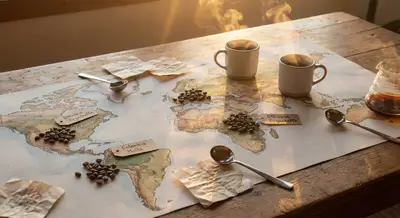
When you look at a bag of beans, think of origin as your “flavor map,” helping you predict what’s in the cup.
Exploring the Major Coffee Regions (with Tasting Notes)
Below are broad flavor “signatures” by region. Individual farms and roasters will vary, but this gives you a starting compass.
East Africa: Bright, Floral, and Complex
Ethiopia (the birthplace of coffee)
Typical notes:
- Flavor: Jasmine, bergamot, stone fruit, blueberry, honey
- Acidity: Bright, often tea-like
- Body: Light to medium, silky
- Great for: Filter brewing, adventurous palates, floral espresso blends
Kenya
Typical notes:
- Flavor: Blackcurrant, grapefruit, tomato, red berry, molasses
- Acidity: Lively, winey, sometimes tangy
- Body: Medium, juicy
- Great for: Pour-overs where you want a sparkling, fruit-driven cup
Central America: Balanced, Clean, and Approachable
Guatemala
Typical notes:
- Flavor: Cocoa, caramel, orange, baking spices, nutty undertones
- Acidity: Medium, often citrusy
- Body: Medium, creamy
- Great for: Drip coffee, balanced espresso, all-purpose daily drinkers
Costa Rica
Typical notes:
- Flavor: Citrus, brown sugar, tropical fruit (especially in honey/natural processes)
- Acidity: Lively but clean
- Body: Medium, structured
- Great for: Filter brews that highlight sweetness and clarity
South America: Comforting, Sweet, and Versatile
Colombia
Typical notes:
- Flavor: Milk chocolate, caramel, red apple, gentle berry
- Acidity: Medium, malic (think apple/pear)
- Body: Medium, smooth
- Great for: Espresso, cold brew, and as a base in blends
Brazil
Typical notes:
- Flavor: Nuts (hazelnut, peanut), chocolate, mild dried fruit
- Acidity: Low to medium
- Body: Medium-heavy, round
- Great for: Espresso foundations, milk-based drinks, crowd-pleasing coffees
Asia and the Pacific: Deep, Earthy, and Bold
Indonesia (Sumatra, Sulawesi, Java)
Typical notes:
- Flavor: Earthy, herbal, tobacco, cocoa, dark fruit, spice
- Acidity: Low
- Body: Heavy, syrupy
- Great for: French press, dark roasts, drinkers who love intensity and depth
Papua New Guinea
Typical notes:
- Flavor: Cocoa, tropical fruit, herbaceous notes
- Acidity: Medium, bright
- Body: Medium
- Great for: Filter brews when you want something slightly wild but balanced
Use these profiles as a guide: if you love bright, tea-like coffees, gravitate toward East Africa; if you prefer sweet, chocolatey comfort, explore South America and parts of Central America.
How to Choose the Right Beans for Your Taste
When you’re selecting beans (online or in a café), look at four main clues on the bag:
Origin and region
- Single origin (e.g., “Ethiopia Yirgacheffe”) often highlights a distinct, traceable flavor profile. - Blends (e.g., “House Espresso Blend”) are curated to be balanced and consistent, often chocolatey and sweet.
Processing method
- Washed: Cleaner, brighter flavors, higher perceived acidity; great for clarity in pour-over. - Natural (dry): Fruit-forward, heavier body, can be funky or jammy. - Honey / Pulped Natural: In-between—sweet, rounded, with some clarity. - Experimental (anaerobic, carbonic): Intense aromatics, wild flavors; best if you already like adventurous cups.
Roast level
- Light: Highlights origin, acidity, and nuanced flavors. Ideal for filter brewing. - Medium: Balanced sweetness, acidity, and body; versatile for most methods. - Dark: Dominated by roast flavors (smoke, bitter chocolate); lower acidity; strong in milk drinks.
Freshness and roast date
- Look for a roast date, not just “best by.” - Sweet spot for most whole beans: 4–21 days after roast for filter; 7–30 days for espresso. - Avoid pre-ground when possible; grind fresh for a big flavor upgrade.
Matching Beans to Your Preferred Brew Method
- Pour-over / drip: Light to medium roast single origins from Ethiopia, Kenya, Guatemala, Colombia.
- Espresso: Medium to medium-dark roasts; blends with Brazil/Colombia bases plus a bit of brighter origin.
- French press: Medium to dark, full-bodied coffees—Brazil, Sumatra, some Guatemalas.
- Cold brew: Chocolatey, low-acid coffees; Brazil, Colombia, blends labeled “cold brew.”
Brewing for Origin: Step-by-Step Guides
Here are three brew methods with recipe-style guides tailored to highlight origin characteristics.
1. Pour-Over (V60 or Similar) for Bright, Complex Origins
Best for: Ethiopia, Kenya, high-altitude Central and South America.
What you’ll need
- V60 (or similar dripper) + paper filter
- Freshly ground coffee (medium-fine, like table salt)
- Kettle (ideally with a gooseneck)
- Scale and timer
- Mug or carafe
- Coffee: 15 g
- Water: 250 g (ml) at ~93–96°C (200–205°F)
- Brew time: ~2:45–3:15 minutes
Basic recipe (1 cup)
Step-by-step
Rinse the filter
- Place the filter in your dripper and rinse with hot water. - Discard rinse water; this preheats and removes paper taste.
Add coffee and bloom
- Add 15 g of coffee. - Start timer and pour ~40–50 g of water evenly. - Gently swirl or stir to saturate, then let bloom for 30–40 seconds (releases trapped gases and improves extraction).
Main pour
- At ~0:30–0:40, slowly pour in circles until you reach 150 g. - At ~1:15, pour again up to 250 g total. - Keep the stream gentle, centered, and avoid pouring directly on filter walls.
Drawdown and taste
- The coffee should finish draining by ~2:45–3:15. - If it’s too fast and tastes sour/thin, grind finer next time. - If too slow and tastes bitter/astringent, grind coarser.
This style of brewing prioritizes clarity and acidity, perfect for floral and fruity origins.
2. French Press for Deep, Full-Bodied Coffees
Best for: Sumatra, Brazil, chocolatey Guatemalas, darker roasts.
What you’ll need
- French press
- Coarse-ground coffee (like coarse sea salt)
- Kettle
- Scale and timer
- Coffee: 30 g
- Water: 500 g (ml) at ~93–96°C (200–205°F)
- Brew time: 4 minutes
Basic recipe (2 cups)
Step-by-step
Preheat
- Rinse the press with hot water, then discard.
Add coffee and water
- Add 30 g of coffee. - Start timer; add all 500 g of water, ensuring all grounds are wet. - Gently stir to break up any clumps.
Steep
- Place the lid on (plunger pulled up) and let steep for 4 minutes.
Break crust and skim (optional but improves clarity)
- At 4:00, gently stir the crust that formed on top. - Scoop off floating foam and grounds with a spoon.
Press and pour
- Press plunger down slowly and steadily. - Pour into cups or a separate server immediately to avoid over-extraction.
You’ll get a heavier body and more texture—perfect for origins known for richness and earthiness.
3. Espresso Basics to Showcase Origin in a Shot
Espresso magnifies everything: flavor, sweetness, acidity, and flaws. It’s best to start with approachable origins (Brazil, Colombia, balanced blends) and then explore brighter single origins as you gain control.
What you’ll need
- Espresso machine with stable temperature and pressure
- Espresso grinder (very fine, highly adjustable)
- Tamper, scale, timer
- Coffee: 18 g
- Yield: 36 g liquid espresso
- Time: 25–30 seconds from first drip
Basic “starter” recipe (double shot)
Step-by-step
Dial in the grind
- Start with a fine grind. - Pull a shot. - If the shot runs in under 20 seconds and tastes sour/watery, grind finer. - If it takes over 35 seconds and tastes harsh/bitter, grind coarser.
Dose and distribute
- Weigh 18 g of coffee into the portafilter. - Gently tap and use a distribution tool or your finger to level the grounds.
Tamp
- Tamp with firm, even pressure, keeping the surface flat.
Pull the shot
- Lock in the portafilter and start the shot immediately. - Aim for 36 g in 25–30 seconds. - Adjust grind and dose in small steps over several shots.
Espresso-specific single origins (labeled as such) are usually roasted to balance origin character with sweetness and body.
Tasting Coffee Like a Pro (Without Being Pretentious)
Tasting notes can sound intimidating, but they’re just a way to pay attention and describe what you enjoy. Here’s a simple framework you can use for any origin:
Smell first
- Before sipping, smell the grounds (dry aroma), then the brewed coffee (wet aroma). - Note whatever comes to mind: chocolate, nuts, flowers, fruit, spices, even “smells like fresh rain.”
Evaluate the first sips
- Take a small sip and let it coat your tongue. - Focus on: - Sweetness: like sugar, honey, caramel? - Acidity: bright like citrus? soft like apple or grape? - Body: light like tea, medium like 2% milk, or heavy like cream?
Look for flavor notes
- After a few sips, think in broad categories: - Fruity (berry, stone fruit, citrus) - Floral (jasmine, rose) - Nutty/chocolatey (almond, cocoa) - Spicy/herbal (cinnamon, clove, mint) - You don’t have to be perfect—use your own words. “Tastes like dark chocolate and orange zest” is great.
Notice aftertaste and balance
- Does flavor linger pleasantly or disappear quickly? - Does anything feel sharp or out of place (too sour, too bitter), or is it harmonious?
Over time, you’ll start to recognize, for example, “this tastes like a washed Ethiopia” or “this must be a Brazilian base coffee.” That’s when origin really clicks.
Essential Equipment Recommendations by Budget
You don’t need a full café setup to taste origin differences—but a few key tools make a big impact.
Grinder (Most Important Upgrade)
- Entry-level burr grinder (for filter):
- Look for manual or electric burr grinders from reputable brands (e.g., Baratza, Timemore).
- Burrs (not blades) are crucial for consistent particle size, which means more even extraction and clearer flavors.
- Espresso-capable grinder:
- Must offer fine, micro-stepped or stepless adjustment.
- Invest here if espresso is a priority; an espresso machine is only as good as the grinder.
Brewing Gear by Method
- For pour-over
- V60, Kalita Wave, or similar flat/cono dripper.
- A gooseneck kettle for controlled pouring (electric or stovetop).
- Paper filters and a simple digital scale.
- For French press
- A sturdy press with a reliable mesh filter.
- Optional: additional metal filter screen for better sediment control.
- For espresso
- Machine with stable temperature and at least 9 bars of pressure.
- Bottomless (naked) portafilter to diagnose channeling.
- Basic distribution tool and level tamper.
Helpful Extras
- Digital scale with 0.1 g precision (for both coffee and water).
- Thermometer (if your kettle isn’t temperature-controlled).
- Good storage: Opaque, airtight canister; store beans in a cool, dry place (not the fridge or freezer unless you follow specific freezing best practices).
Quality equipment doesn’t just make coffee taste better—it makes it consistent, so you can actually compare origins and notice what changes.
Bringing It All Together: Building Your Own Origin Journey
If you’d like a structured way to explore:
Pick two contrasting origins
- Example: A washed Ethiopia vs. a Brazil natural. - Brew them the same way (same ratio, same method, same water).
Taste side-by-side
- Alternate sips and note differences in aroma, acidity, sweetness, and body. - You’ll quickly see what “bright and floral” vs. “nutty and chocolatey” really means.
Change just one variable at a time
- Keep the coffee the same but tweak grind, ratio, or brew time. - Notice how each change affects flavor; you’ll gain fine control over your cup.
Keep a simple coffee journal
- Note origin, roast level, brew recipe, and a few tasting words. - Over weeks, you’ll see your preferences and patterns clearly.
Coffee origin is a lens that connects you to growers, landscapes, and traditions all over the world. With a bit of knowledge and some intentional brewing, every cup can become a small, daily journey—from farm to first sip.
Sources
- [Specialty Coffee Association – Coffee Standards and Education](https://sca.coffee/research) - Provides research and standards on coffee quality, brewing, and sensory analysis
- [National Coffee Association USA – Coffee Around the World](https://www.ncausa.org/About-Coffee/Coffee-Around-the-World) - Overview of major coffee-producing regions and their characteristics
- [Coffee Research Institute – Coffee Chemistry and Origin](https://www.coffeeresearch.org/science/) - Technical explanations of how origin, altitude, and processing affect flavor
- [Counter Culture Coffee – Brewing Guides](https://counterculturecoffee.com/learn/brewing-guides) - Practical brew recipes and method-specific tips used as a reference for step-by-step instructions
- [Sweet Maria’s – Coffee Shrub Country Profiles](https://legacy.sweetmarias.com/library/content/country-profiles) - Detailed country-by-country breakdowns of typical flavor profiles and processing styles
Key Takeaway
The most important thing to remember from this article is that this information can change how you think about Bean Origins.