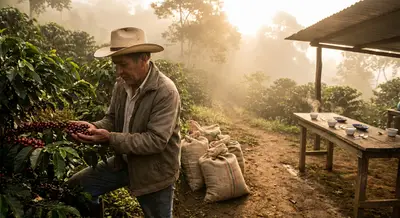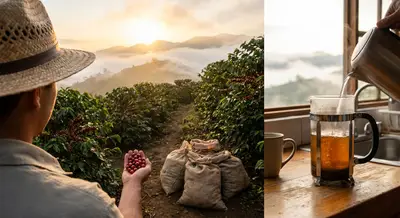
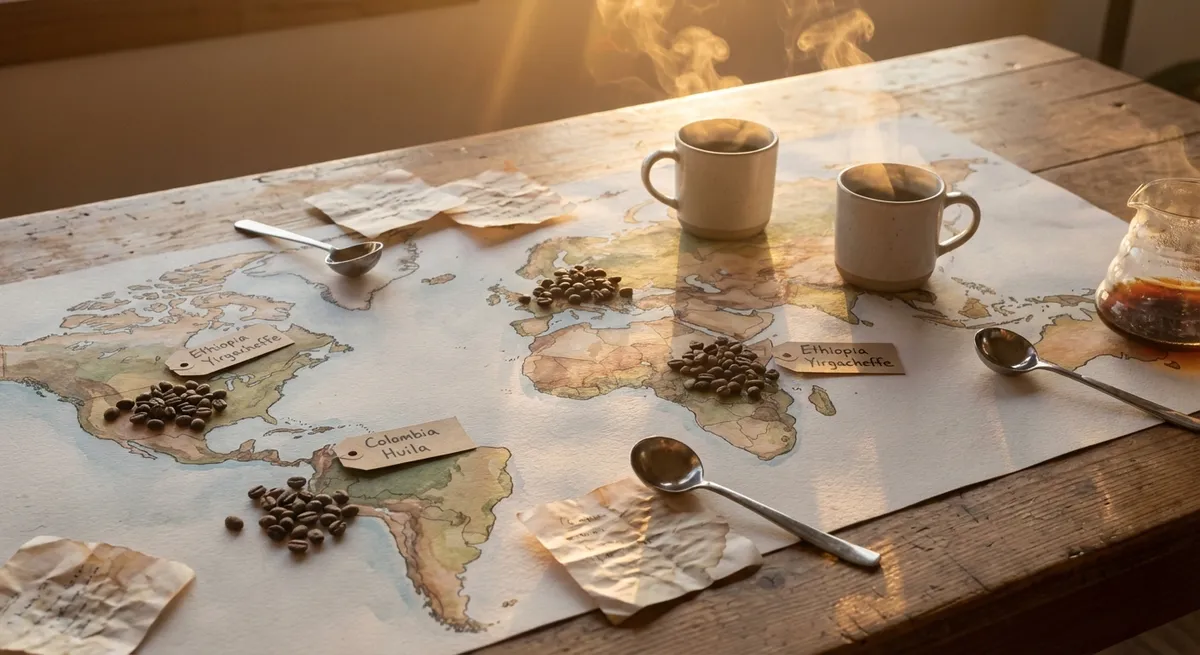
The journey from green hillsides to your mug is far more than a supply chain—it’s a story of landscapes, people, and flavor choices that you feel in every sip. When you understand where beans come from and how origin shapes taste, brewing transforms from a routine into a daily ritual. This guide is your compass to bean origins, brewing techniques, and thoughtful equipment, so you can taste the world one cup at a time—and share that adventure with others.
How Origin Shapes Flavor: The “Terroir” of Coffee
Coffee, like wine, wears its birthplace in every cup. Climate, altitude, soil, and processing combine into what many call coffee’s terroir—the taste of place.
Beans from higher altitudes (often 1,400m and above) typically grow more slowly, developing denser seeds. These denser beans often showcase brighter acidity and more complex flavor layers. Lower-altitude coffees can lean toward chocolatey, nutty, or pleasantly simple profiles that feel comforting and familiar.
Processing adds another dimension. In washed (wet-processed) coffees, the fruit is removed before drying, letting acidity and clarity shine. Natural (dry-processed) coffees dry with the fruit intact, often leading to jammy sweetness, berry notes, and heavier body. Honey and other hybrid processes sit between these poles, balancing clarity with sweetness.
When you learn to connect taste to place—East Africa’s citrus spark, Central America’s chocolate backbone, Indonesia’s earthy depth—you’re no longer just drinking “coffee.” You’re visiting an origin in liquid form.
Regional Flavor Journeys: What to Expect in Your Cup
Let’s take a broad, flavor-first tour of some major growing regions. These are not rigid rules, but helpful starting points for your palate.
East Africa (Ethiopia, Kenya, Rwanda & Beyond)
East African coffees are often the darlings of specialty cafes for their brightness and aromatic range.
Typical profiles:
- Ethiopia: Floral (jasmine, bergamot), stone fruit (peach, apricot), and berries, especially in natural-processed lots. Often tea-like in body with sparkling acidity.
- Kenya: Blackcurrant, tomato-like umami, grapefruit or lime zest, and a syrupy sweetness. Crisp, structured acidity.
Best for drinkers who enjoy: Lively, fruit-forward flavors and a wine-like experience.
Latin America (Colombia, Guatemala, Costa Rica, Brazil, etc.)
Latin American origins cover a huge spectrum, but many are known for balance and approachability.
Typical profiles:
- Colombia: Caramel sweetness, balanced acidity, notes of red apple, milk chocolate, and nuts. A versatile “bridge” origin.
- Guatemala: Cocoa, baking spices, orange or lemon brightness, often rich yet refined.
- Costa Rica: Clean, sweet, sometimes tropical or citrusy, especially in honey or natural lots.
- Brazil: Lower acidity, heavy body, chocolate, roasted nuts, and sometimes subtle dried fruit. Often used as a base in espresso blends.
Best for drinkers who enjoy: Classic “coffee” flavors with modern nuance—chocolate, nuts, gentle fruit, and caramel.
Asia-Pacific (Indonesia, Papua New Guinea, etc.)
These coffees can be deeply grounding, with a unique savory complexity.
Typical profiles:
- Indonesia (Sumatra, Sulawesi): Earthy, spicy, herbaceous notes, dark chocolate, sometimes tobacco or cedar. Fuller body and muted acidity.
- Papua New Guinea: Can offer a bridge between Latin American sweetness and East African fruitiness—citrus, floral hints, and gentle earthiness.
Best for drinkers who enjoy: Heavier, comforting cups, with spice, earth, and chocolate in the spotlight.
Choosing Beans by Origin: A Practical Framework
When you’re staring at a shelf full of bags, origin can guide you toward the flavors you crave. Here’s a straightforward way to choose:
- Decide your flavor mood.
- Bright & fruity? Start with Ethiopia or Kenya.
- Balanced & familiar? Look to Colombia, Guatemala, or Costa Rica.
- Dark & grounding? Explore Sumatra or Brazil.
- Check the processing method.
- Washed: Clean, bright, often “crisper.”
- Natural: Funky, fruity, heavier.
- Honey / Pulped Natural: Middle ground—sweet and round with some clarity.
- Scan for altitude and variety (optional but fun).
Higher altitudes often point to more acidity and nuance. Certain varieties (e.g., Geisha/Gesha, SL28, Bourbon) can indicate more distinctive flavor potential.
- Look for roast level aligned with origin.
- Light to medium: Best for exploring nuanced origin characteristics.
- Medium-dark: Brings more chocolate/caramel, reduces acidity, can overshadow delicate florals.
- Buy in small quantities.
Choose 250g/12oz bags of different origins, taste them side by side, and keep brief notes. Think in comparisons: “Fruitier than the Colombia,” “More chocolate than the Ethiopia,” etc.
Simple Tasting Ritual: How to Explore Origin Like a Pro
You don’t need a lab or a Q-grader certification to taste thoughtfully. Here’s an approachable, repeatable ritual you can share with friends or on social media.
Step 1: Set Up Two Origins Side by Side
Pick two distinctly different coffees—for example:
- Ethiopia (washed)
- Brazil (natural)
Keep everything else constant: same brew method, ratio, grind, and water.
Step 2: Brew with Care
Use a consistent recipe, such as:
- 15 g coffee
- 250 g water
- Filtered water at ~93–96°C (200–205°F)
- Pour-over like a V60, Kalita Wave, or similar
We’ll cover method specifics in the next section; for now, consistency matters more than perfection.
Step 3: Smell First
Before you taste, inhale deeply over each cup:
- Dry aroma (ground coffee)
- Wet aroma (right after brewing)
Ask yourself: floral, fruity, nutty, spicy, chocolatey, savory? Even vague impressions are valuable.
Step 4: Taste in Sips, Not Gulps
Take small sips from each cup, alternating:
- Notice acidity: Is it sharp like lemon, soft like stone fruit, or barely there?
- Check body: Light and tea-like or heavy and creamy?
- Identify sweetness: Sugarcane, honey, caramel, cocoa, or subtle fruit?
Write 3-5 words per coffee. Simplicity wins: “bright, lemony, light body” vs. “chocolatey, nutty, low acidity.”
Step 5: Note Aftertaste and Cooling Changes
Flavor evolves as the coffee cools. Revisit each cup between 5–10 minutes and again around 15:
- Does it become more floral, more chocolaty, or more bitter?
- Which cup do you keep coming back to?
This small ritual builds a library of taste memories tied to origins—your own personal flavor map.
Brew Techniques That Highlight Different Origins
Brewing isn’t just extraction; it’s translation. Different methods “translate” origin characteristics in different ways. Here’s how to pair methods with origins and what to tweak.
Pour-Over for Clarity (Great for Bright, Complex Origins)
Ideal for: Ethiopia, Kenya, high-altitude washed coffees
Why: Pour-over brewers (V60, Kalita Wave, Origami, etc.) emphasize clarity, accentuating acidity and aromatic complexity.
Basic Pour-Over Recipe (V60 style)
Grind & dose:
- 18 g coffee (medium-fine grind, like coarse sand) - 300 g water at ~94°C (201°F)
- Rinse filter and preheat.
Discard rinse water.
Bloom:
- Start timer. Add 45–60 g water to saturate grounds. - Swirl gently. Let sit 30–45 seconds.
Main pours:
- Pour in 2–3 stages up to 300 g, finishing around 2:15–2:30. - Total brew time: 2:45–3:15.
Taste & adjust:
- Too sour/thin? Grind finer. - Too bitter/heavy? Grind coarser.
This style lets a Kenyan’s currant-like brightness or an Ethiopian’s florals shine with minimal distraction.
Immersion for Comfort (Great for Chocolatey, Earthy Origins)
Ideal for: Brazil, Sumatra, many Latin American coffees
Why: Full-immersion brewers (French press, Clever Dripper, AeroPress in immersion style) highlight body and sweetness.
Basic French Press Recipe
Grind & dose:
- 30 g coffee (medium-coarse, like kosher salt) - 500 g water at ~93°C (200°F)
Combine & bloom:
- Add coffee, start timer. - Pour all water, stir gently to wet grounds evenly.
Steep:
- Let sit 4 minutes with lid on (plunger up).
Clean the crust:
- At 4 minutes, gently break crust on top with a spoon. - Skim foam and floating grounds for a cleaner cup.
Press & pour:
- Slowly press plunger down. - Decant immediately to avoid over-extraction.
Expect rounded chocolate, nuts, and spice—especially satisfying with origins like Brazil or Sumatra.
Espresso for Intensity (Blends & Bold Single Origins)
Ideal for: Blends, Brazil, chocolatey Colombians, and adventurous drinkers with fruitier single origins.
Espresso compresses flavor into ~25–40 seconds of high-pressure extraction. It can accentuate both sweetness and defects, so choose carefully roasted beans.
Starter Espresso Parameters
- Dose: 18 g coffee
- Yield: 36–40 g espresso
- Time: 25–30 seconds from first drip
Dialing in:
- Sour/too sharp? Grind finer or extend shot time slightly.
- Bitter/ashy? Grind coarser or reduce shot time.
Blends often mix Brazil (for body), a washed Central American (for structure), and a touch of East African (for brightness). As you gain confidence, try single-origin espresso from Colombia or Ethiopia to experience origin in high resolution.
Equipment That Respects Your Beans (Without Going Overboard)
You don’t need a cafe’s budget to honor high-quality beans. Prioritize a few pieces that preserve origin character.
Grinder: The Non-Negotiable Hero
Why it matters: A consistent grinder controls extraction. Uneven grounds can make fruity coffees taste harsh and chocolatey coffees taste muddy.
Recommendations by level:
- Entry-level hand grinders:
Affordable, excellent for pour-over and immersion. Look for conical burrs and adjustable grind. Examples include models from Timemore or Hario.
- Mid-range electric grinders:
Better consistency and convenience. Burr grinders from Baratza or Fellow are popular in home setups.
Choose a grinder before a fancy brewer; it will do more to unlock origin flavors than almost any other tool.
Kettle: Precision for Pour-Over, Flexibility for Everything
- Gooseneck electric kettle:
Gives you control over flow rate and temperature, ideal for pour-over and careful extraction. Variable temperature is helpful for dialing in brightness.
- Standard kettle:
Fine for immersion methods and can work for pour-over if you pour slowly and carefully.
If you’re serious about tasting differences between origins, a gooseneck kettle simplifies getting reproducible results.
Brewers: Simple Tools, Big Differences
- Pour-over: V60, Kalita Wave, or similar for clarity and bright origins.
- Immersion: French press, Clever Dripper, AeroPress for fuller body and forgiving brews.
- Espresso machine: A bigger commitment—best once you’ve explored manual methods.
Start with one method that excites you and master it with multiple origins before expanding your toolkit.
Origin-Focused Brew Pairings to Try at Home
Here are a few concrete pairings you can experiment with and share:
Ethiopia (Washed) + V60
- Expect: Jasmine, bergamot, citrus, tea-like body.
- Brew tip: Keep total brew time around 3 minutes and avoid overheating; too hot and it can taste sharp instead of bright.
Kenya (Washed) + AeroPress (Inverted)
- Expect: Blackcurrant, grape, tomato-like savory notes, intense acidity.
- Brew tip: Short, concentrated brew (e.g., 15 g coffee, 200 g water, ~1:30–2:00 total) creates an espresso-like intensity without a machine.
Brazil (Natural) + French Press
- Expect: Cocoa, roasted nuts, heavy body, low acidity.
- Brew tip: Skim the crust and pour immediately after plunging to keep the sweetness front and center.
Colombia (Washed) + Kalita Wave
- Expect: Balanced apple-like acidity, caramel sweetness, milk chocolate notes.
- Brew tip: Use a slightly finer grind than for V60 to emphasize sweetness and smooth body.
Conclusion
Bean origins are more than labels on a bag—they’re invitations. When you learn how place shapes flavor, how process changes character, and how brewing translates those qualities into your cup, every coffee becomes a story you can taste and share.
Explore broadly: cup an Ethiopian next to a Brazilian, a Guatemalan next to a Sumatran. Adjust your brew to highlight what each origin does best. With a thoughtful grinder, a simple brewer, and a curious palate, you can map the coffee world from your kitchen—one origin, one ritual, one sip at a time.
Sources
- [Specialty Coffee Association – Introduction to Coffee](https://sca.coffee/education/coffee-skills-program/introduction-to-coffee) - Overview of coffee origins, processing methods, and foundational concepts in specialty coffee
- [National Coffee Association (NCA) – Coffee Around the World](https://www.ncausa.org/About-Coffee/Coffee-Around-the-World) - Regional summaries of coffee-growing countries and their characteristics
- [Coffee Research Institute – Coffee Terroir and Quality](https://www.coffeeresearch.org/agriculture/terroir.htm) - Detailed discussion of how altitude, climate, and soil influence cup quality
- [Smithsonian Magazine – The Birthplace of Coffee](https://www.smithsonianmag.com/travel/where-did-coffee-come-from-360967/) - Historical perspective on Ethiopian coffee and the spread of coffee cultivation
- [Barista Hustle – The Water Course](https://www.baristahustle.com/blog/the-water-course/) - In-depth exploration of water’s role in extraction and how it affects flavor perception across different coffees
Key Takeaway
The most important thing to remember from this article is that this information can change how you think about Bean Origins.