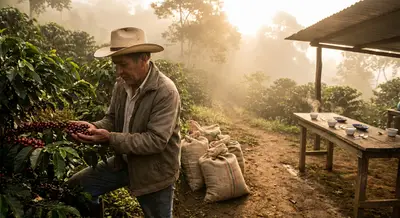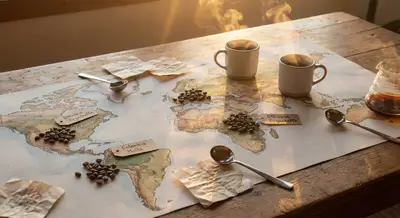
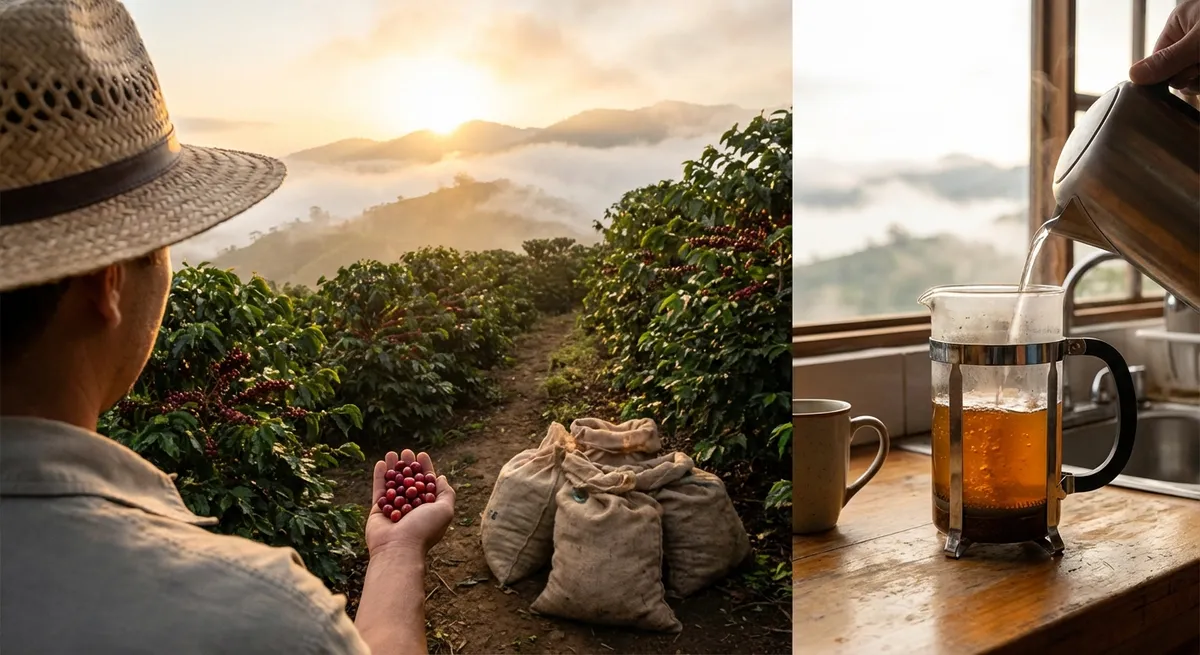
Coffee is more than a caffeine delivery system—it’s a global story in a cup. Every bean carries the imprint of its origin: the soil, altitude, climate, processing method, and the people who nurtured it. Understanding where your beans come from doesn’t just make you a more informed coffee drinker; it unlocks flavors and brewing styles you might never have imagined.
Let’s travel across the “bean belt,” decode origin flavors, and match them with brewing techniques, gear, and tasting practices you can use at home.
The Bean Belt: Where Coffee Is Born
Coffee grows in a band around the equator—often called the “bean belt”—stretching across Latin America, Africa, the Middle East, and Asia-Pacific. Within this belt, altitude, temperature, rainfall, and soil composition shape how a coffee tastes in your cup.
Higher-altitude coffees (often 1,200+ meters above sea level) grow more slowly, allowing flavors to concentrate. These beans tend to be denser and often show brighter acidity and complex aromatics. Lower-altitude coffees may be milder, earthier, or more chocolatey, depending on the region and processing method.
Two main species dominate specialty coffee:
- Arabica (Coffea arabica) – More nuanced flavors, higher acidity, less bitterness, and typically associated with specialty coffee.
- Robusta (Coffea canephora) – Higher caffeine, stronger bitterness, more body, often used in espresso blends or instant coffee.
But within Arabica alone, you have countless varieties (Bourbon, Typica, Geisha/Gesha, Caturra, SL28, and more), each influenced by its origin. Think of origin as “region + environment + processing + people.” When you choose a bag marked “Ethiopia washed” or “Colombia natural,” you’re choosing a distinct flavor story.
Key Origin Profiles: How Different Regions Taste
Origin isn’t just geography—it’s a flavor map. Here’s an overview of what you can expect from major coffee regions, along with brewing suggestions that showcase their strengths.
Latin America: Balanced & Familiar
Countries: Brazil, Colombia, Guatemala, Honduras, Costa Rica, Peru, Mexico
Typical flavor notes
- Brazil: Nuts (almond, peanut, hazelnut), milk chocolate, mild fruit
- Colombia: Caramel, red fruits, citrus, balanced body
- Guatemala: Cocoa, baking spice, orange, sometimes floral
- Costa Rica: Bright citrus, honey, clean sweetness
- Drip machines / auto brewers – Highlight their balance and sweetness.
- French press – Boosts body and chocolate/nut notes.
- Espresso – Latin American coffees often make crowd-pleasing, chocolatey shots.
Best brewing matches
East Africa: Bright, Fruity & Floral
Countries: Ethiopia, Kenya, Rwanda, Burundi, Tanzania
Typical flavor notes
- Ethiopia (washed): Jasmine, bergamot, lemon, black tea-like body
- Ethiopia (natural): Blueberry, strawberry, tropical fruit, winey sweetness
- Kenya: Blackcurrant, grapefruit, tomato-like umami, intense acidity
- Rwanda/Burundi: Stone fruit (peach, plum), citrus, complex sweetness
- Pour-over (V60, Kalita, Chemex) – Accentuates clarity and acidity.
- Aeropress – Lets you play with strength while preserving bright flavors.
- Cold brew with naturals – Offers a sweet, berry-forward, low-acid cup.
Best brewing matches
Asia-Pacific: Earthy, Spicy & Full-Bodied
Countries: Indonesia (Sumatra, Java), Vietnam, Papua New Guinea, India
Typical flavor notes
- Sumatra: Earthy, herbal, dark chocolate, tobacco, syrupy body
- Java: Cocoa, woody spices, smoother body
- India: Spiced notes (clove, cardamom), cocoa, nutty undertones
- French press – Emphasizes body and earthy depth.
- Espresso – Adds structure and crema to blends.
- Moka pot – Produces a rich, intense cup well-suited to these beans.
Best brewing matches
Processing Methods: How Post-Harvest Choices Shape Flavor
After coffee cherries are picked, the way they’re processed dramatically changes how they taste. When you see “washed,” “natural,” or “honey” on a bag, that’s what it refers to.
- Washed (wet processed)
- How it works: Skin and fruit (pulp) are removed; beans are fermented in water, then washed and dried.
- Flavor: Clean, bright, high clarity. Acidity and origin character shine.
- Best for: Pour-over, drip, tasting origin nuances.
- Natural (dry processed)
- How it works: Whole cherries are dried in the sun with fruit still on; dried husk is removed later.
- Flavor: Fruity, winey, often berry-like with heavier body; can be funkier or jammy.
- Best for: Espresso (for sweetness), immersion methods, cold brew.
- Honey / Pulped Natural
- How it works: Skin removed, but some mucilage (sticky fruit layer) remains while beans dry.
- Flavor: Between washed and natural—sweet and fruity, but cleaner than naturals.
- Best for: Versatile; works in both filter and espresso.
Knowing the process lets you choose beans that match your taste: clean and bright (washed), bold and fruity (natural), or sweet and balanced (honey).
Matching Origins to Brew Methods: A Practical Guide
Here’s a simple pairing framework you can use when choosing beans and brewing methods:
- You love bright, tea-like coffees with citrus or floral notes
- Try: Washed Ethiopia, Kenya, Rwanda
- Brew: V60, Kalita, Chemex, light-dose Aeropress
- Grind: Medium-fine (for pour-over)
- You want chocolatey, nutty, “comfort coffee”
- Try: Brazil, Colombia, Guatemala, Peru
- Brew: Drip machine, French press, Moka pot
- Grind: Medium for drip, coarse for French press
- You crave rich, heavy-bodied, “old-school” style cups
- Try: Sumatra, Java, Indian coffees, darker roasts from any region
- Brew: French press, Moka pot, espresso
- Grind: Coarse (press), fine (espresso/Moka)
- You’re into fruity, jammy, dessert-like coffee
- Try: Natural-processed Ethiopia or other natural microlots
- Brew: Aeropress, espresso, cold brew
- Grind: Medium-fine for Aeropress, coarse for cold brew
Step-by-Step: A French Press Recipe for Origin Clarity
French press is known for body, but with a good technique and the right beans, it can reveal origin character beautifully. Here’s a reliable method:
What you’ll need
- French press (3–4 cup size, ~600–800 ml)
- Burr grinder
- Kettle (ideally with a spout)
- Scale (optional but recommended)
- Fresh whole-bean coffee (try a medium roast Latin American or Indonesian)
Brewing steps
Measure and grind
- Use a 1:15 coffee-to-water ratio as a starting point. - Example: 30 g coffee to 450 g (ml) water. - Grind coarse, similar to coarse sea salt.
Preheat
- Rinse your French press with hot water to warm it, then discard the water.
Add coffee and bloom
- Add ground coffee to the press. - Start timer. - Pour about 2–3x the weight of coffee in water (e.g., 60–90 g) just off the boil (~94°C / 201°F). - Stir gently to saturate. Let sit 30–45 seconds to bloom.
Fill and steep
- After bloom, pour the rest of the water to reach your target (e.g., 450 g). - Gently stir once more to ensure no dry pockets. - Place the lid on top but don’t plunge yet. - Steep for 4 minutes as a starting point (adjust later to taste).
Break the crust and skim
- At ~4 minutes, use a spoon to gently break the crust on top and stir once or twice. - Scoop off the floating foam and grounds—this improves clarity and mouthfeel.
Plunge slowly
- Press the plunger down gently over 20–30 seconds.
Serve immediately
- Don’t let the coffee sit in the press; it will over-extract. - Pour into a carafe or cups right away and enjoy.
Tasting tip
As you drink, note:
- First sips (hot): Acidity and aroma are more intense.
- Cooling phase: Sweetness and complexity usually increase. Many origins taste best warm, not boiling hot.
Step-by-Step: Clean Pour-Over to Highlight Origin
Pour-over is fantastic for African and high-altitude coffees where clarity matters.
What you’ll need
- Cone dripper (V60, Kalita, or similar)
- Filter papers
- Kettle (gooseneck recommended)
- Scale and timer
- Fresh whole-bean coffee (a washed Ethiopia or Kenya is perfect)
Brewing steps (V60-style)
Ratio and grind
- Start with 15 g coffee to 250 g water (1:16–1:17 ratio). - Grind medium-fine, like table salt.
Rinse filter
- Place filter in dripper, rinse thoroughly with hot water to remove paper taste and preheat. - Discard the rinse water.
Add coffee and bloom
- Add grounds, gently shake to level. - Start timer and pour about 40–50 g water to bloom. - Swirl or gently stir to ensure all grounds are wet. - Let sit for 30–40 seconds.
Main pours
- Pour in slow circles, keeping the water level steady and avoiding direct pouring on the filter walls. - Aim to reach your full 250 g by around 1:45–2:00 minutes.
Drawdown and finish time
- Let the water fully drain. - Total brew time should be 2:30–3:00 minutes. If it’s much faster, grind finer; if much slower, grind coarser.
Taste and adjust
- If the cup is sour and thin: grind finer or increase brew time slightly. - If it’s bitter and harsh: grind coarser or shorten brew time.
Pour-over brewed this way will highlight origin-specific acidity, florals, and fruit notes, especially from African coffees.
How to Choose Beans: Origin, Roast, and Freshness
When you’re staring at a wall of bags, here’s how to narrow it down intelligently.
1. Decide what flavor profile you want
- Bright and fruity – Look for: “Ethiopia,” “Kenya,” “washed,” “citrus,” “berry,” “floral,” “stone fruit.”
- Chocolatey and nutty – Look for: “Brazil,” “Colombia,” “Guatemala,” “cocoa,” “almond,” “caramel.”
- Spicy and earthy – Look for: “Sumatra,” “Java,” “India,” “herbal,” “spice,” “tobacco.”
2. Check the roast level
- Light roast
- More acidity, origin-driven flavors, higher perceived complexity.
- Great for pour-over, Aeropress, and bright filter coffees.
- Medium roast
- Balance between origin character and roast notes, often crowd-pleasing.
- Very versatile: drip, French press, espresso.
- Dark roast
- Lower acidity, more bitterness, smoky or roasty notes.
- Good for fans of bold, strong-tasting coffee, Moka pot, or certain espresso styles.
3. Look for a roast date
Freshness matters, but coffee also needs some time to “degas.”
- Best window: Roughly 4 days to 4 weeks after roast for most beans.
- Super fresh (1–3 days) can taste sharp or gassy; very old coffee (months) will taste flat and stale.
4. Single-origin vs blend
- Single-origin: Coffee from one country, region, or even a single farm. Great for exploring specific origin characteristics.
- Blends: Multiple origins combined to balance acidity, body, and sweetness. Often designed for espresso or a consistent house profile.
5. Certifications and transparency
- Look for info like farm name, altitude, variety, process, and sometimes certifications (Fair Trade, organic, Rainforest Alliance).
- More detail usually indicates care along the supply chain—and often better quality.
Tasting Like a Pro: Simple At-Home Cupping
You don’t need a lab to taste coffee thoughtfully. A simple “cupping” at home will deepen your understanding of origins.
Setup
- 2–3 different coffees (ideally from different origins)
- Identical cups or bowls
- Burr grinder
- Kettle and scale
- Spoons
Steps
- Grind each coffee medium-coarse at the same ratio (e.g., 12 g in each cup).
- Smell the dry grounds and write down impressions (nutty, fruity, roasty, etc.).
- Add hot water (about 200°F / 93–94°C) at a 1:15–1:17 ratio. Don’t stir yet.
- Wait ~4 minutes. A crust will form on top.
- Break the crust by stirring three times with a spoon while inhaling deeply—this is where aromatics jump out.
- Skim off foam and floating grounds.
- Wait for the coffee to cool slightly and taste with a spoon, slurping to spread across your palate.
Compare:
- Acidity: Bright like citrus? Soft like stone fruit? Low and mellow?
- Body: Light like tea, or heavy and syrupy?
- Flavor notes: Chocolate, nuts, florals, fruit, spice, earth?
- Finish: Short and clean, or long and lingering?
Doing this with, say, a washed Ethiopia vs a Brazil vs a Sumatra will make origin differences leap out.
Equipment Essentials for Showcasing Origin
You don’t need a café setup, but a few well-chosen tools will seriously upgrade your ability to taste origin differences.
Burr grinder (non-negotiable for serious flavor)
- Why it matters: Even particle size = more consistent extraction; origin flavors come through more clearly.
- Options:
- Manual: Great value and consistency (e.g., grinders from Timemore, Hario, 1Zpresso).
- Electric: Easier for daily use (e.g., Baratza Encore-level grinders for beginners).
Precision kettle
- Gooseneck kettle: Helps you pour evenly for pour-over and bloom your grounds properly.
- Temperature control: If possible, aim for ~92–96°C (198–205°F). Slightly cooler water may work better for very light roasts.
Scale with timer
- Ensures you hit your target recipe every time—no guessing ratios, which helps you isolate what’s changing: the bean itself.
Brewers
- French press: Ideal for bold, full-bodied cups, especially Latin American and Indonesian origins.
- Pour-over (V60, Kalita, Chemex): Best for bright African coffees and any origin you want to taste with clarity.
- Aeropress: Versatile and travel-friendly; works well for both bright and rich coffees.
- Espresso machine (optional upgrade): For exploring how different origins express as concentrated shots.
Conclusion
Every coffee you brew is a story of origin: the altitude, climate, processing choices, and people behind the beans. Once you learn to read the bag—country, process, roast level—and match it with the right brewing method, your daily cup stops being routine and starts becoming exploration.
Whether you’re plunging a French press filled with syrupy Sumatra, pouring a delicate washed Ethiopia through a V60, or cupping three origins side by side at your kitchen counter, you’re tasting the world in small, aromatic sips. Follow your palate, take notes, and don’t be afraid to experiment—origin is an endless playground for curious coffee lovers.
Sources
- [National Coffee Association (NCA): Coffee Around the World](https://www.ncausa.org/about-coffee/coffee-around-the-world) – Overview of global coffee-growing regions and their characteristics
- [Specialty Coffee Association (SCA): Coffee Standards & Resources](https://sca.coffee/research) – Research-based resources on coffee quality, brewing, and cupping protocols
- [Counter Culture Coffee: Coffee Origins](https://counterculturecoffee.com/pages/coffee-origins) – Detailed origin guides with flavor profiles and processing explanations
- [Sweet Maria’s: Coffee Shrub – Coffee Processing Methods](https://www.coffeeshrub.com/learn/coffee-processing) – In-depth descriptions of washed, natural, and honey processing methods
- [Perfect Daily Grind: How Origin Affects Coffee Flavour](https://perfectdailygrind.com/2020/06/how-does-origin-affect-the-flavour-of-coffee/) – Accessible exploration of how geography and climate influence coffee taste
Key Takeaway
The most important thing to remember from this article is that this information can change how you think about Bean Origins.